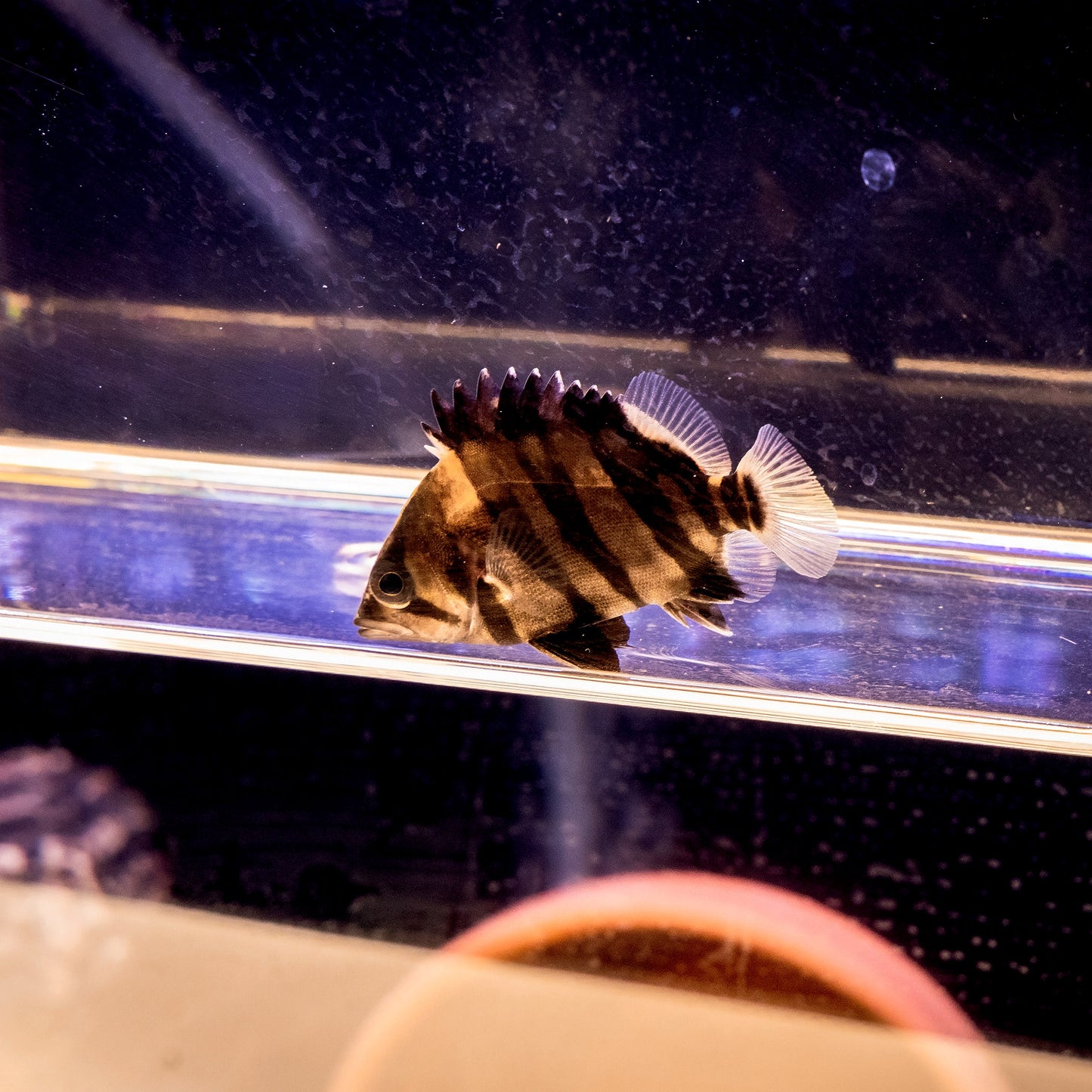
Indonesian Tiger Datnoid Juvenile – Datnioides microlepis
Indonesian Tiger Datnoid Juvenile – Datnioides microlepis
Product Description
The Indonesian Tiger Datnoid Juvenile is a highly sought-after freshwater predator known for its striking golden-bronze body and bold vertical black bands. Also commonly known as the Indonesian Tiger Fish or IT Datnoid, this species develops a deep, powerful body shape and impressive coloration as it matures.
This listing is for juvenile Indonesian Tiger Datnoids. Juveniles may temporarily appear darker or show less stable coloration during shipping or acclimation, but their characteristic tiger pattern often becomes more pronounced once they settle into a stable aquarium environment.
Scientific Name: Datnioides microlepis
Common Names: Indonesian Tiger Datnoid, Indonesian Tiger Fish, IT Datnoid
Family: Datnioididae
Origin: Southeast Asia — primarily Indonesia
Juvenile Size: Approx. 1.2–2.4 in / 3–6 cm
Adult Size: Approx. 18–20+ in / 45–50+ cm
Care Level: Moderate to Advanced
Temperament: Semi-aggressive / Predatory
Swimming Level: Middle to lower water column
Recommended Tank Size:
A grow-out aquarium may be used for juveniles, but approximately 180+ gallons is recommended for long-term adult care.
Water Parameters:
- Temperature: 75–82°F / 24–28°C
- pH: 6.0–7.5
- Clean, well-filtered water
- Ammonia and nitrite should remain at 0 ppm
- Strong biological filtration and regular water changes recommended
Diet:
Carnivorous. Feed shrimp, krill, mysis, chopped seafood, worms, and high-quality carnivore pellets. Juveniles may initially prefer frozen or meaty foods before accepting prepared pellets.
Aquarium Setup:
Provide driftwood, rocks, shaded hiding areas, and plenty of open swimming space. Stable water conditions and adequate cover help juveniles acclimate and display better coloration.
Compatibility:
Best kept with similarly sized or larger tank mates. Small fish, shrimp, and other animals that can fit into its mouth may be viewed as prey.
Care Notes:
Juvenile Indonesian Tiger Datnoids may temporarily darken or lose contrast due to shipping, stress, lighting, or acclimation. Individual band patterns and coloration naturally vary. This species grows into a large predatory fish and requires substantial aquarium space as it matures.
100 in stock
Couldn't load pickup availability